COVID-19 Royal Commission Website
Supporting the COVID-19 Royal Commission website through scalable content delivery, structured data handling, and consistent design implementation.
Delivering 141 Graphs for the COVID-19 Royal Commission Website
When we were tasked with producing 141 individual graphs for the COVID-19 Royal Commission website, it quickly became clear that a manual, graph-by-graph approach wouldn’t be sustainable. To meet both the scale and the quality required, we needed a smarter, more efficient way to work.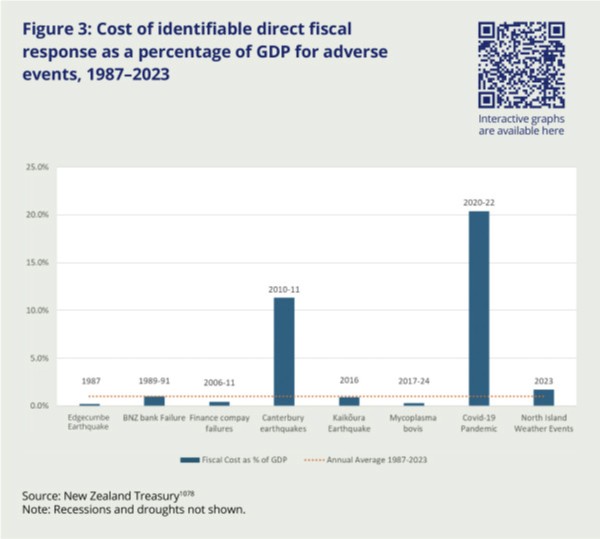
Designing for Scale, Not Repetition
Many of the graphs shared a common structure, despite representing different datasets. Rather than rebuilding each one from scratch, we approached the challenge as a system design problem.
Using Claude AI, we developed a series of flexible templates that could be reused across multiple graphs. Each template was designed to accept different data inputs, allowing us to generate unique outputs while maintaining a consistent structure and visual standard.
This approach enabled us to:
-
Eliminate repetitive manual work
-
Maintain consistency across all 141 graphs
-
Significantly speed up delivery
Where Automation Meets Precision
While AI played a key role in accelerating production, it was only part of the process.
Each graph still required careful refinement to ensure it met the expected standard. This included:
-
Adjusting layouts for clarity and accessibility
-
Refining visual styles to align with the website design
-
Fine-tuning details to accurately reflect the original design intent
This balance between automation and hands-on expertise ensured that efficiency didn’t come at the expense of quality.
Behind the Scenes: Coordinating Large-Scale Content Delivery
Alongside graph production, the broader content loading process for the COVID-19 Royal Commission website was a significant undertaking in its own right.
While the end result appears simple and intuitive to navigate, delivering that experience required careful coordination across a team of 8–10 people, each contributing to different components of the site.
The work extended far beyond uploading content. It involved:
-
Structuring and formatting large volumes of text
-
Integrating images, tables, and graphs seamlessly
-
Ensuring links and footnotes functioned correctly
-
Troubleshooting formatting inconsistencies across pages
-
Validating content accuracy and consistency throughout
Much of the complexity came from small but critical details. Elements that, if not handled correctly, could disrupt the user experience. Tables would break, links wouldn’t resolve properly, or content wouldn’t display as intended. Each issue required investigation, testing, and refinement.
This collaborative, detail-oriented approach was essential to ensuring the final product felt cohesive and effortless for users.
The Outcome
The result is a website that feels simple, clear, and easy to navigate, but that simplicity is underpinned by a significant amount of coordinated effort behind the scenes.
Projects like this highlight an important reality of digital delivery:
The most seamless user experiences are often the most complex to build.